Search

Travelling Photographer

Photos and commentary from my travels around the globe

Category

Spain

2019 Europe & Africa Trip – Day 5 – Malaga Second Day

We returned to Malaga to visit the Picasso Museum and the Alcazaba de Malaga. I thought that by visiting the museum I would finally understand the thinking behind Picasso’s drawings, painting and sculptures – not so – the so called experts talking about Picasso’s works seemed to be providing their views and not any real insight into Picasso’s. No pic’s here cameras restricted.

The Museo Picasso Málaga is a museum in Málaga, Andalusia, Spain, the city where artist Pablo Ruiz Picasso was born. It opened in 2003 in the Buenavista Palace, and has 285 works donated by members of Picasso’s family.   (see  https://www.museopicassomalaga.org/  for more info).
Alcazaba de Malaga

Constructed on the ruins of a Roman fortification during the reign of Abd-al-Rahman I, the first Emir of Cordoba, in around 756-780AD, the Alcazaba’s original purpose was as a defense against pirates, thanks its commanding position with views over the city, down to the sea and across to Africa. The fortress was rebuilt by the Sultan of Granada, Badis Al-Ziri, from 1057-1063AD, while the fortified double walls that connect the Alcazaba to the neighbouring Castillo de Gibralfaro, over the Coracha ridge, were built by the Nasrid ruler Yusuf I in the 14th century, when most of the inner palace was also refurbished. As a palace, it was home to a number of Moorish rulers. For more info:    http://www.malagaturismo.com/es/recursos-turisticos/detalle/alcazaba/6

Our Spanish adventure ends tomorrow – we fly to Amsterdam, spend the night and fly to Cape Town on Thursday — see you then.

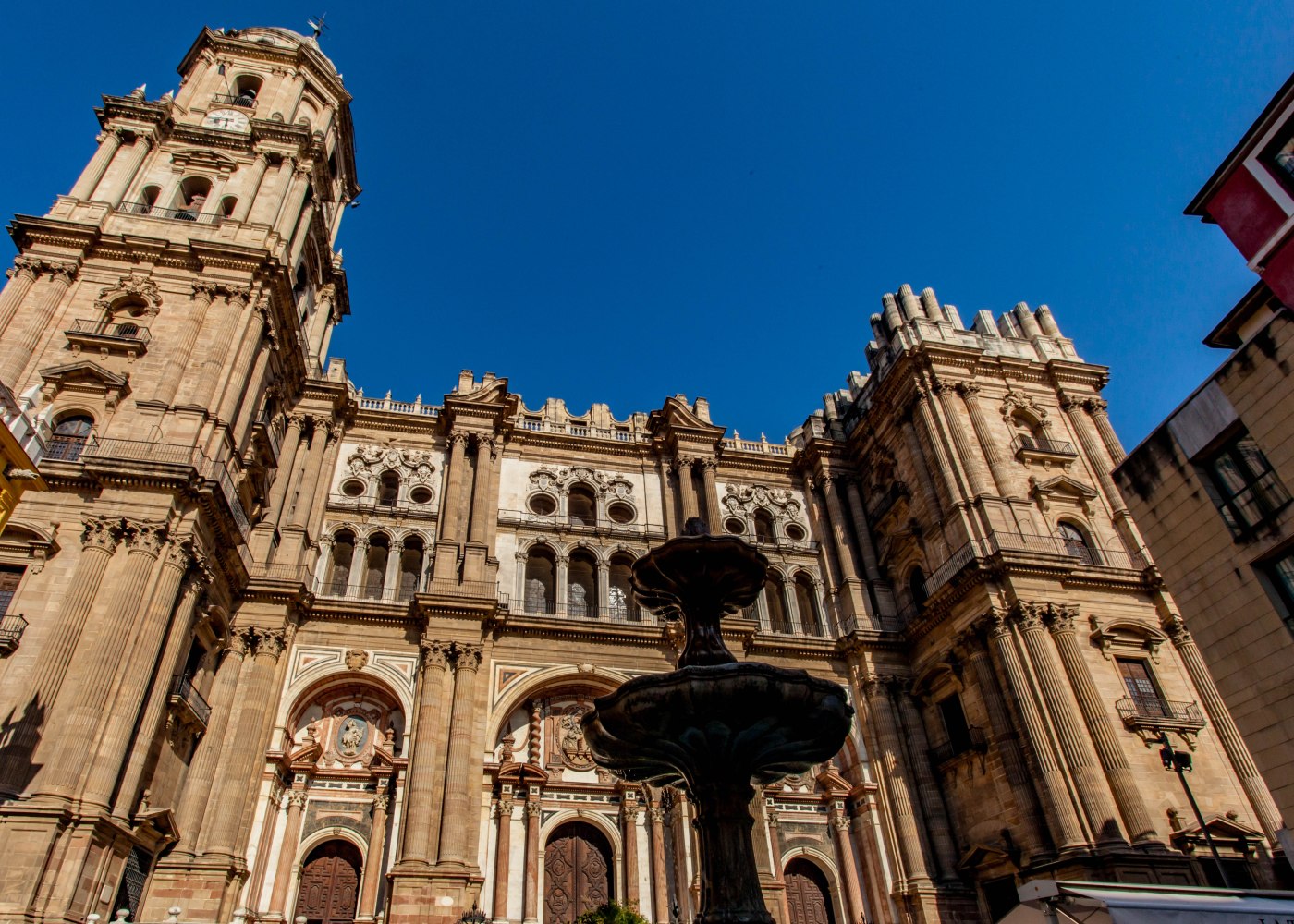
BTW – the colors on the Cathedral were much different this morning then on our last afternoon visit.


2019 Europe & Africa Trip – Day 4 – Mijas Pueblo Spain

Today was a relaxing day – hung out by the pool this morning and toured the town of Mijas Pueblo in the afternoon and diner in the seaside town of Fuengirola (at an Argentina steakhouse — seafood was getting a little repetitive).

The little village of Mijas nestles in the mountainside 400 meters above sea level and 10km from the coast.  Of the ten thousand population, there are so many foreign and English speaking residents in and around the village that the Town Hall has a very helpful Foreigner’s Department, which caters for the needs of those residents who do not speak Spanish.   Mijas Pueblo has  managed to retain much of its traditional Andalucian way of life, the locals displaying their passion for all things festive and an unmistakable relaxed outlook.  As we walked the streets we watch the town begin decorating for their annual festival which starts on the 6th.

2019 Trip to Europe and Africa – Day 2 – Nerja and Malaga Spain

Our road trip through the Costa del Sol continues with a 100km drive north of our villa to the town of Nerja on the coast. Its seafront promenade, Balcón de Europa, tops a promontory with views of the Mediterranean and surrounding mountains. Below it lie sandy beaches and cliffside coves. The town is noted for it caves with stalagmites and stalactites – however we passed previously visiting caves in the US and other European countries. We walked the old town passing many shops and restraunts and visiting a couple of churches. Tapas for lunch and a stop at Frigiliana a white washed village in the hills above Nerja on our way to the main city of Costa del Sol – Malaga.
In Malaga we climbed (very steep) walk ways to the Castle Gibrafaro – The castle was built in 929AD by Abd-al-Rahman III, Caliph of Cordoba, on a former Phoenician enclosure and lighthouse, from which its name was derived – gebel-faro (Arabic and Greek, meaning rock of the lighthouse). Yusef 1, Sultan of Granada, enlarged it at the beginning of the 14th century. Figure that out. The castle is famous for its three-month siege by the Catholic monarchs, Ferdinand and Isabella, which ended only when hunger forced the Malagueños to surrender. Afterwards Ferdinand occupied the site, while his queen took up residence in the town. Interesting historic fact: this was the first conflict in which gunpowder was used by both sides. We completed today’s visit to Malaga viewing the cathedral touring both the inside and climbing to the roof for excellent views of the town and sea. Malaga´s cathedral was built between 1528 and 1782 on or near the site of a former mosque. While original plans had allowed for two towers, both lack of funds those donated to American Independence resulted in the completion of only one, giving rise to the name by which the cathedral is affectionately referred to, La Manquita, loosely interpreted as “one armed woman”. We will return to Malaga later in the seek to visit museumes and the Alcazaba fort.

2019 Trip to Europe and Africa – Day 1 – Ronda & Marabella Spain

Our journey begins in the Costa del Sol, Spain for a week of sight seeing then proceeds to South Africa for a safari and Victoria Falls for two weeks finishing up in Tuscany, Italy for more sight seeing and wine tasting.

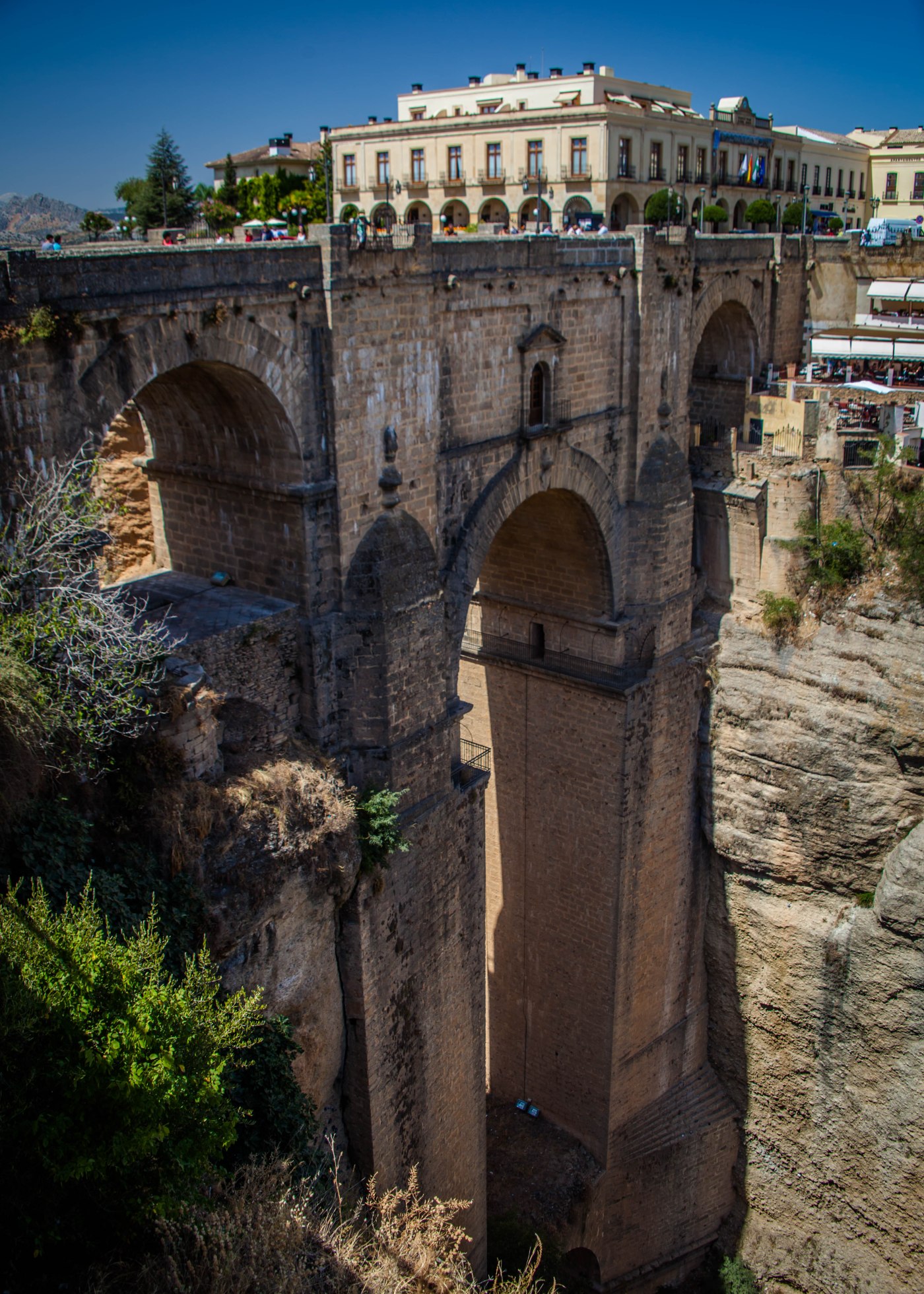
We arrive at the Marriott in Costa del Sol after 23 hours of travelling and had a much needed long nights sleep. Today’s journey started with a 45km winding ride north through the white mountains to the town of Ronda. Ronda is a mountaintop city in Spain’s Malaga province that’s set dramatically above a deep gorge. This gorge (El Tajo) separates the city’s circa-15th-century new town from its old town, dating to Moorish rule. Puente Nuevo, a stone bridge spanning the gorge, has a lookout offering views. New town’s Plaza de Toros, a legendary 18th-century bullring.   After a leisurely lunch we headed to Marabella a sea side town with an ill defined city center.  Marbella is a city and resort area on southern Spain’s Costa del Sol, part of the Andalusia region. The Sierra Blanca Mountains are the backdrop to 27 km of sandy Mediterranean beaches, villas, hotels, and golf courses.

Ronda

Marabella

Blog at WordPress.com.

Up ↑