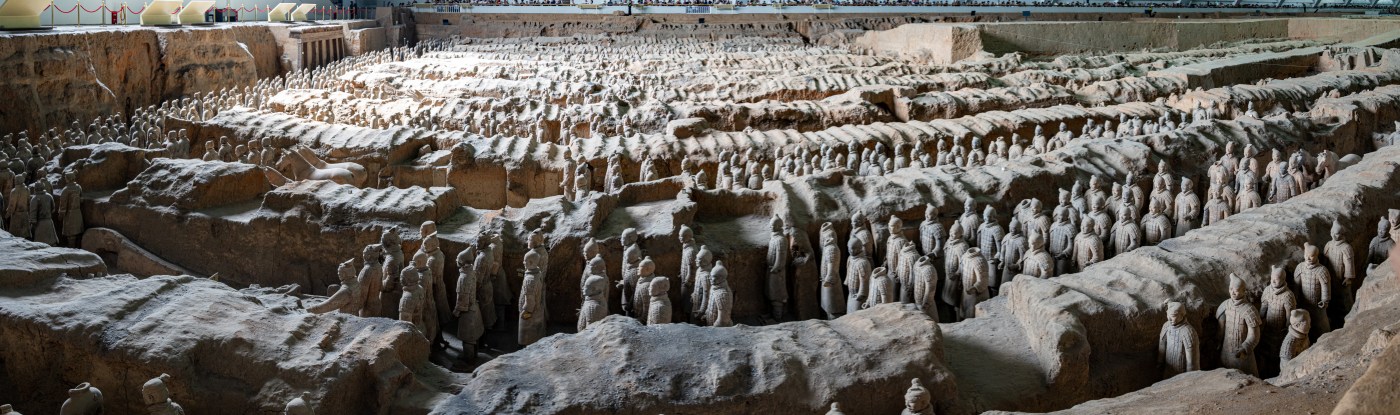
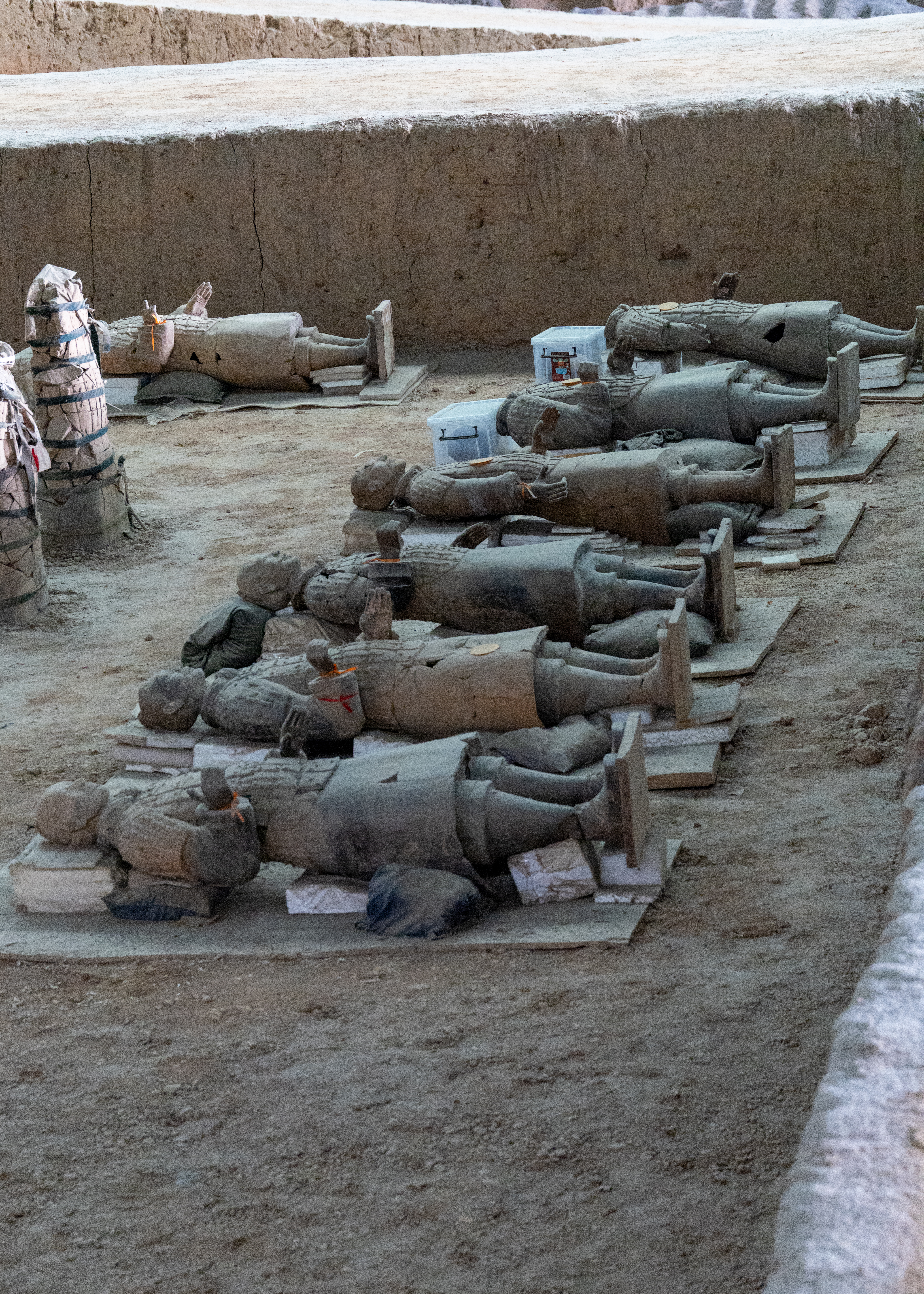
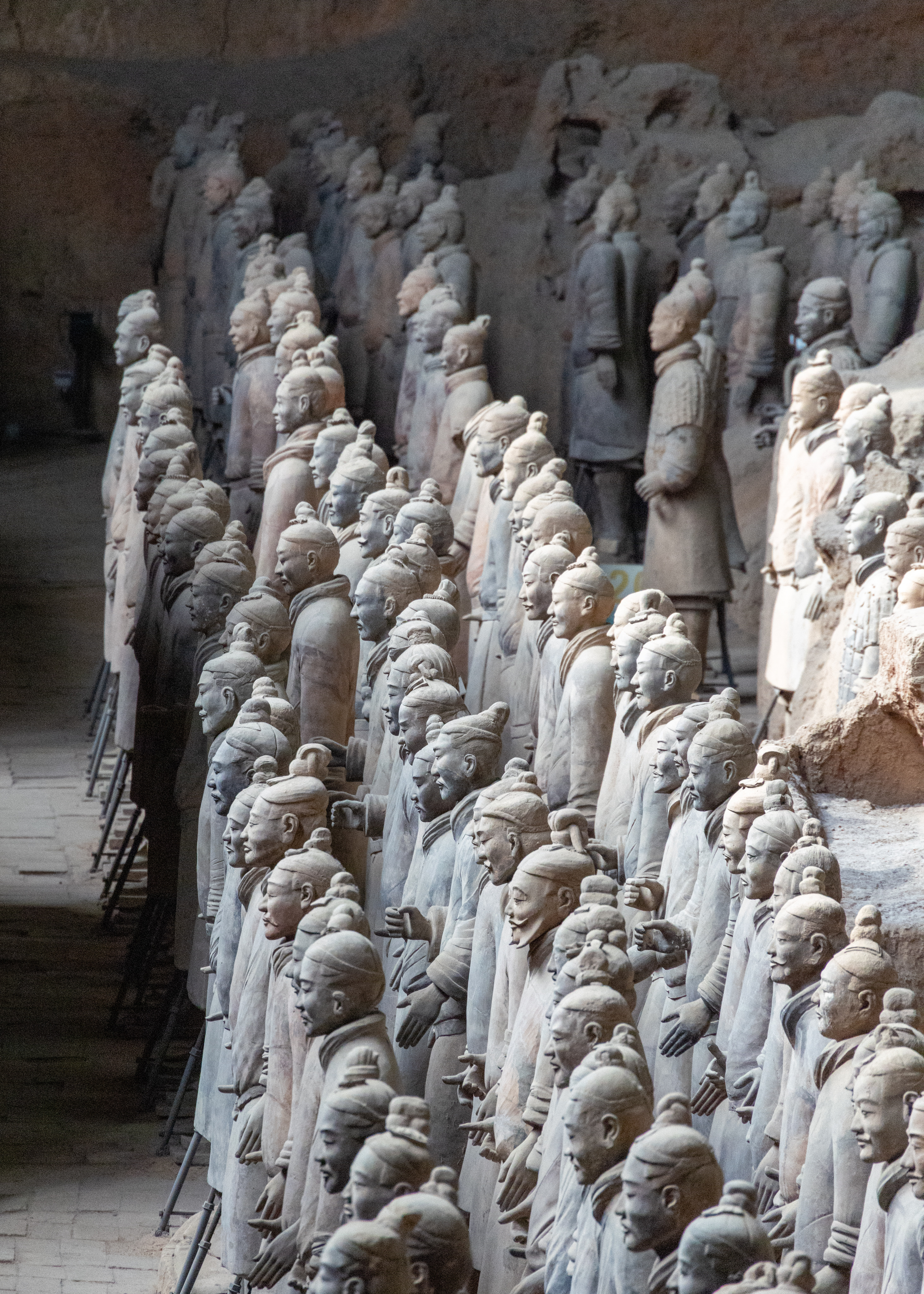
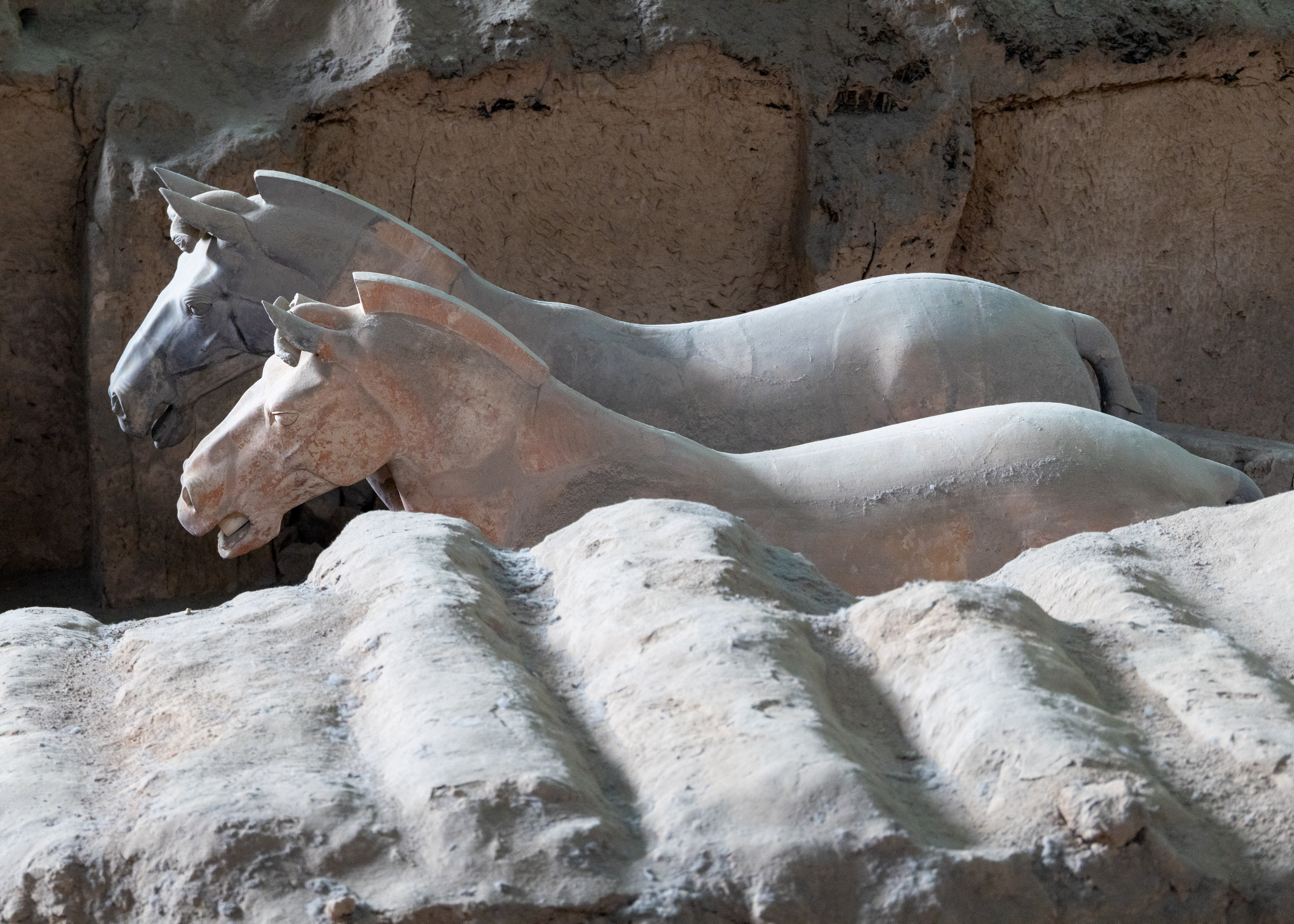
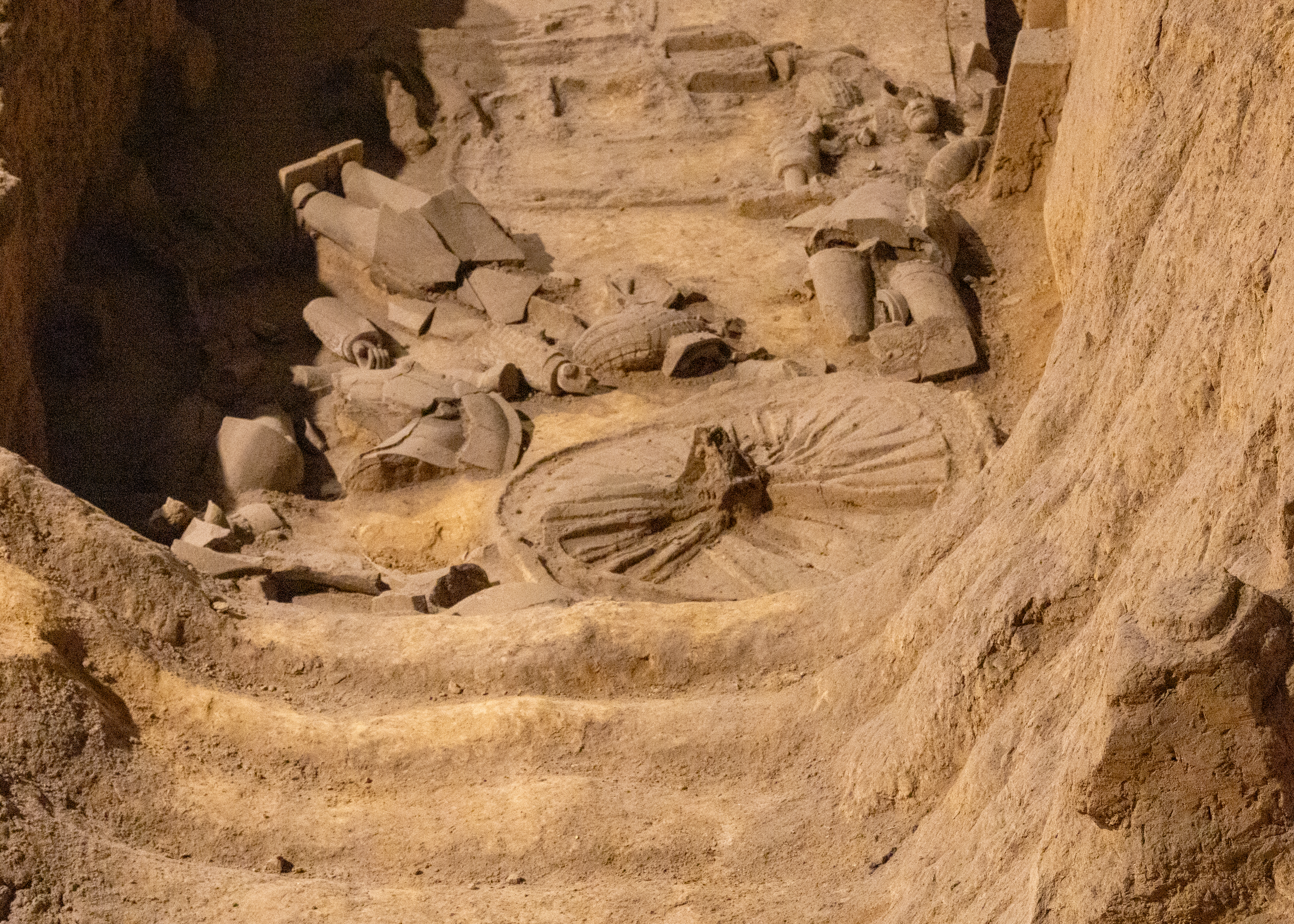
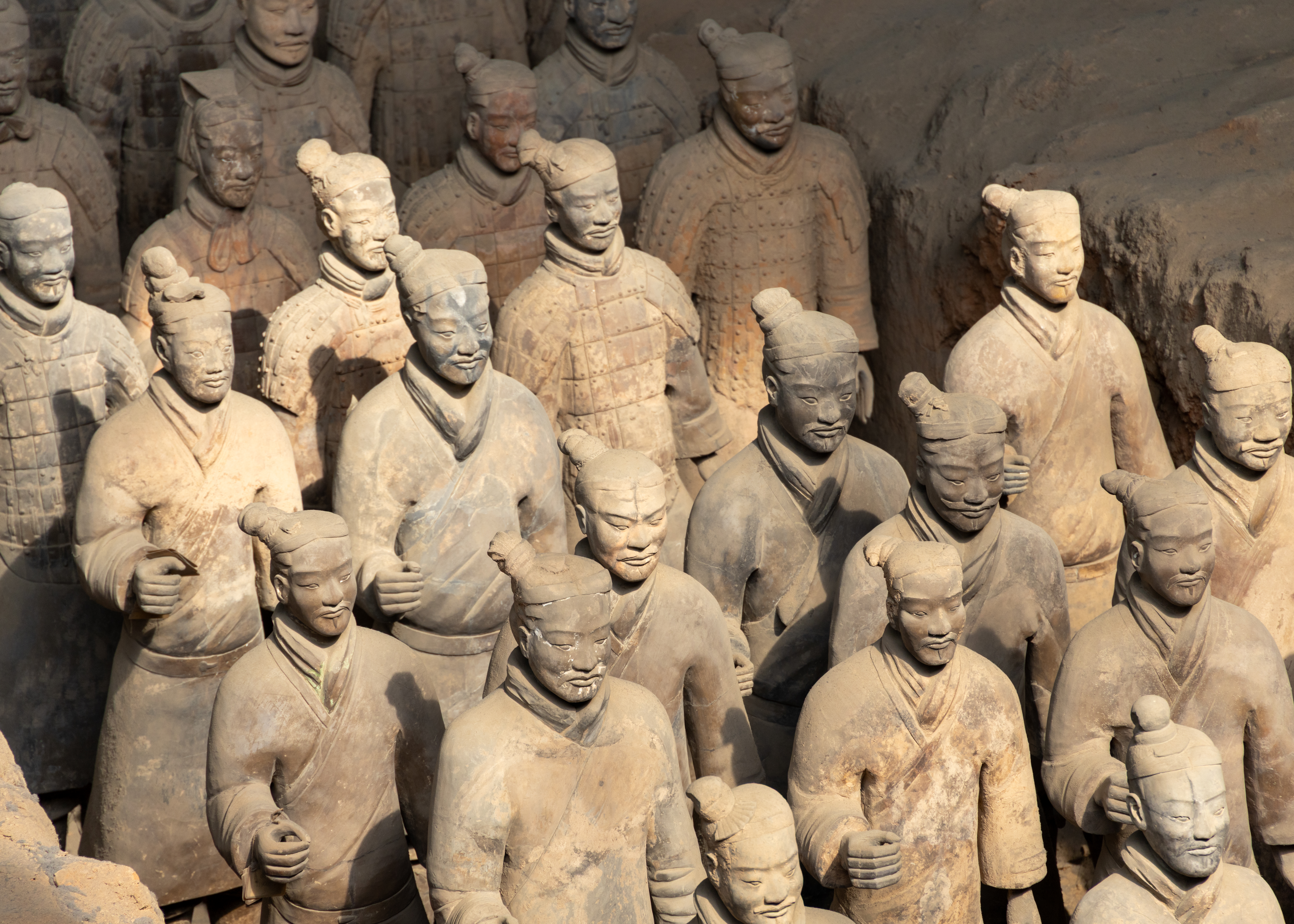
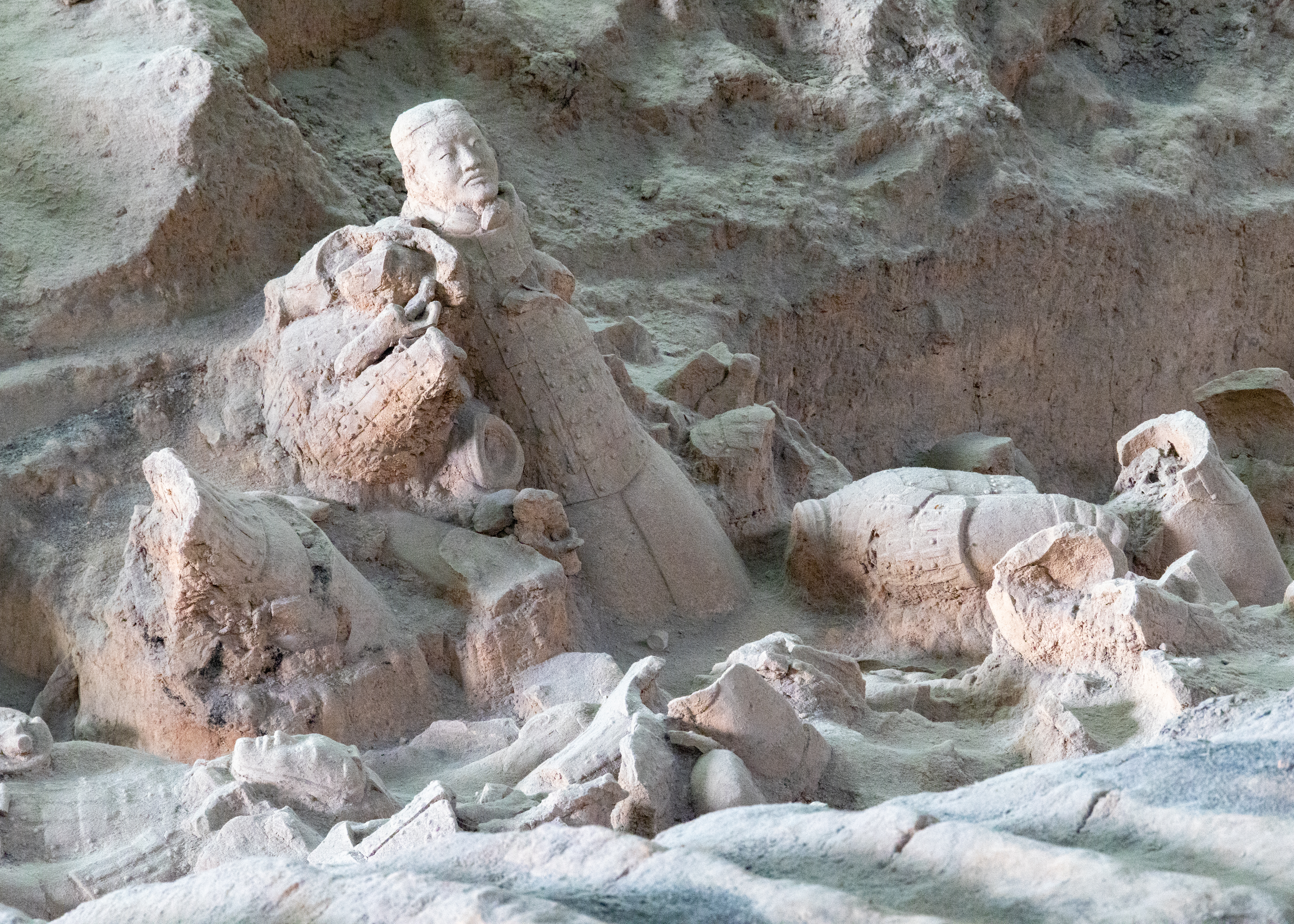
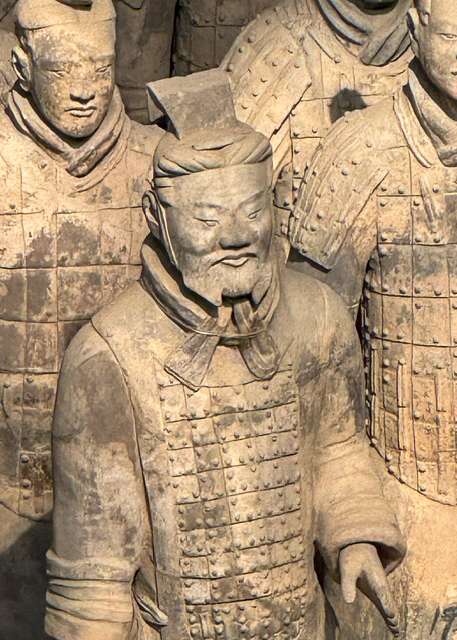
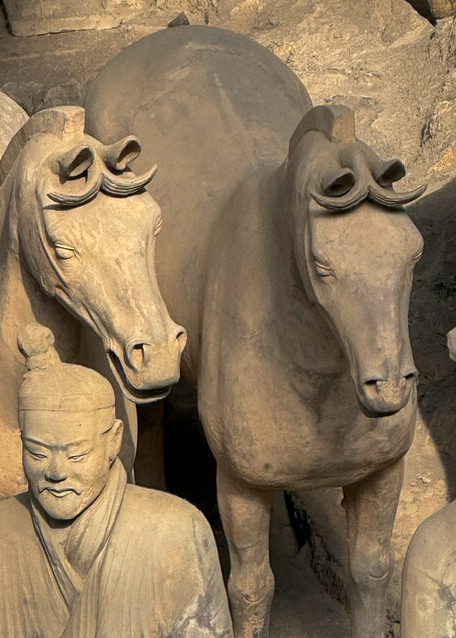
In March 1974, a group of peasants digging a well in China’s drought-parched Shaanxi province unearthed fragments of a clay figure—the first evidence of what would turn out to be one of the greatest archaeological discoveries of modern times. Near the unexcavated tomb of Qin Shi Huang—who proclaimed himself first emperor of China in 221 B.C.E.—lay an extraordinary underground treasure: an entire army of life-size terra-cotta soldiers and horses, interred for more than 2,000 years. Over the past 50 years, archaeologists have located some 600 pits, a complex of underground vaults, across a 22-square-mile area. Some are hard to get to, but three major pits are easily accessible, enclosed inside Emperor Qinshihuang’s Mausoleum Site Museum, constructed around the discovery site and opened in 1979 as the four-acre Museum of Qin Terra-Cotta Warriors and Horses. In one pit, long columns of warriors, reassembled from broken pieces, stand in formation. With their topknots or caps, their tunics or armoured vests, their goatees or close-cropped beards, the soldiers exhibit an astonishing individuality. A second pit inside the museum demonstrates how they appeared when they were found: Some stand upright, buried to their shoulders in soil, while others lie toppled on their backs, alongside fallen and cracked clay horses. Exhibitions have featured statuary—armoured officers, infantrymen, and standing and kneeling archers—as well as terra-cotta horses and replicas of intricately detailed bronze chariots, drawn by bronze horses. These artifacts offer a glimpse of the treasure trove that attracts visitors to the Xi’an museum site, where more than 2,000 of the estimated 8,000 warriors have been disinterred so far.
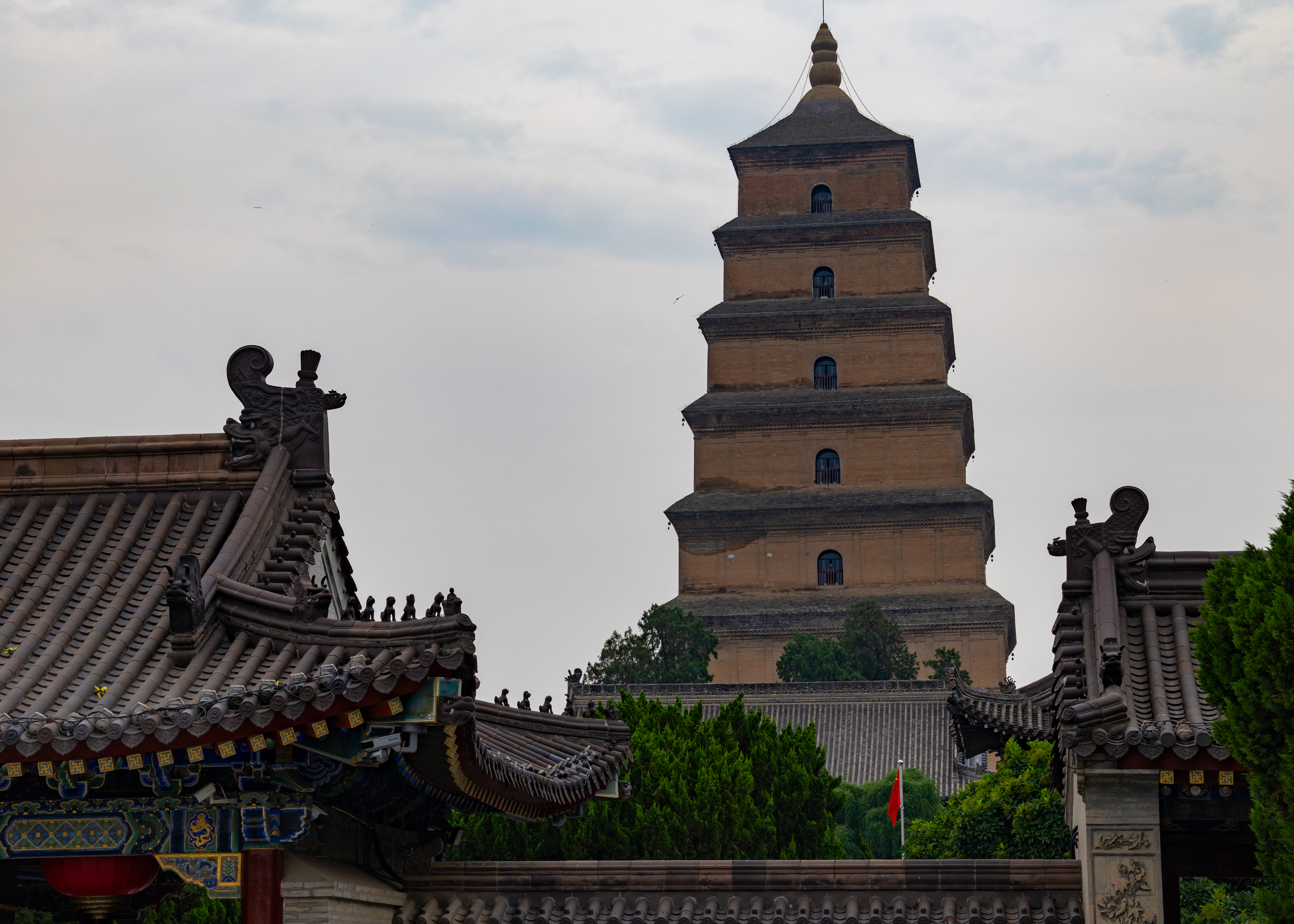
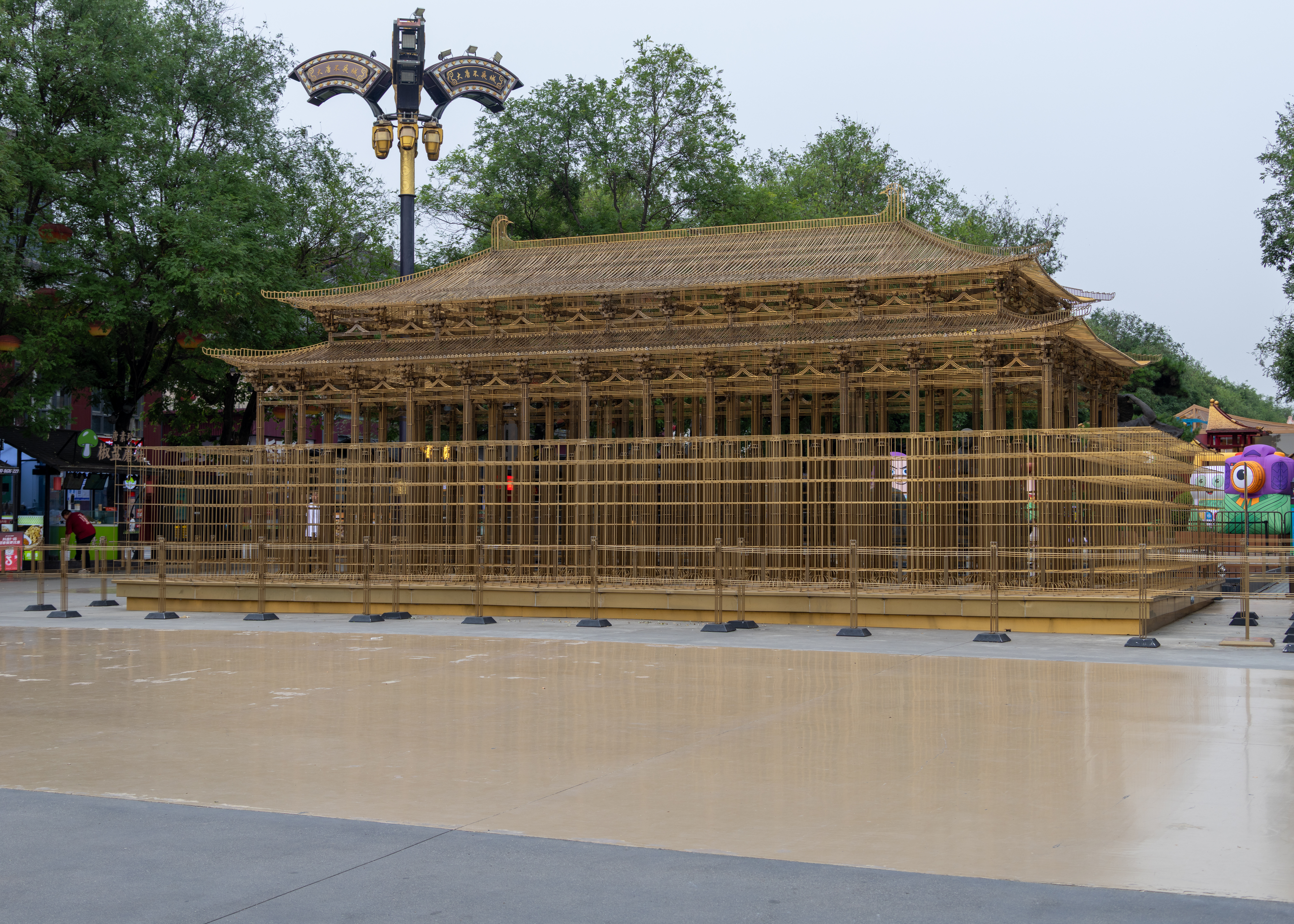
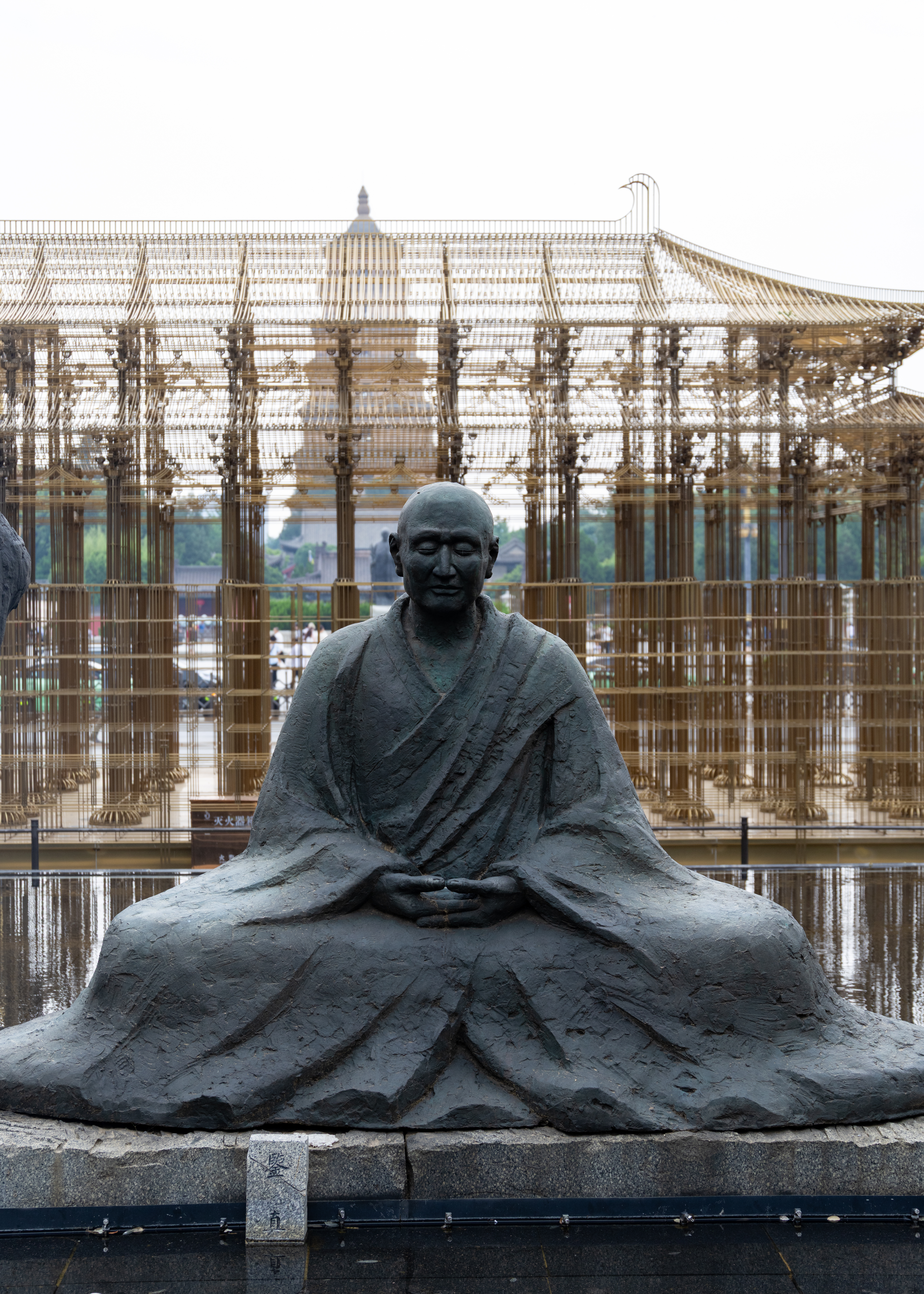
Grand Wild Goose Pagoda
There is a legend about the pagoda’s name. According to ancient stories of Buddhists, there were two branches, for one of which eating meat was not a taboo. One day, they couldn’t find any meat to buy. Upon seeing a group of big wild geese flying by, a monk said to himself: “Today we have no meat. I hope the merciful Bodhisattva can give us some.” At that very moment, the leading wild goose broke its wings and fell to the ground. All the monks were startled and believed that Bodhisattva showed his spirit to order them to be more pious. In response to this divine message, they established a pagoda where the wild goose fell and stopped eating meat thereafter. Hence its name.
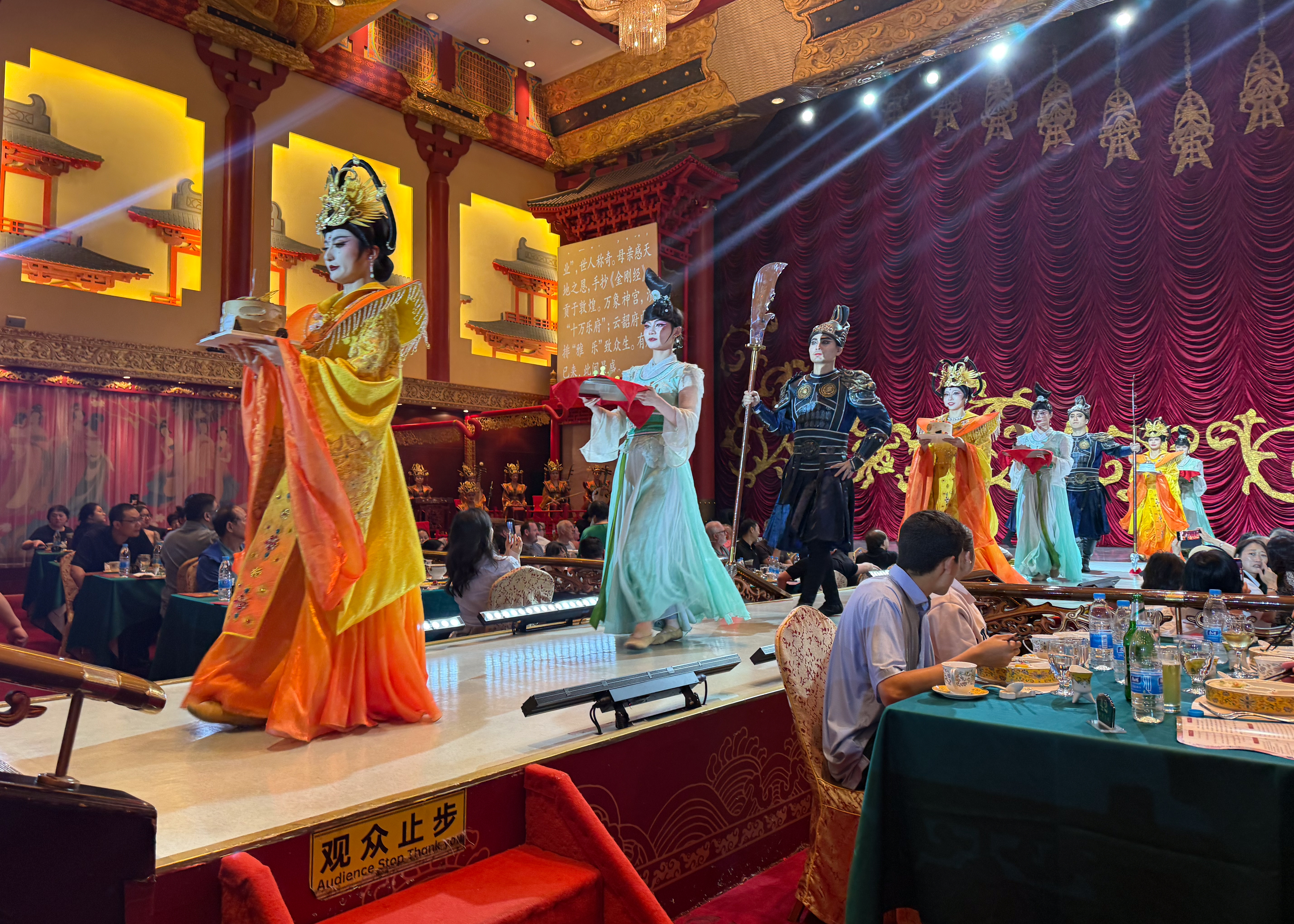
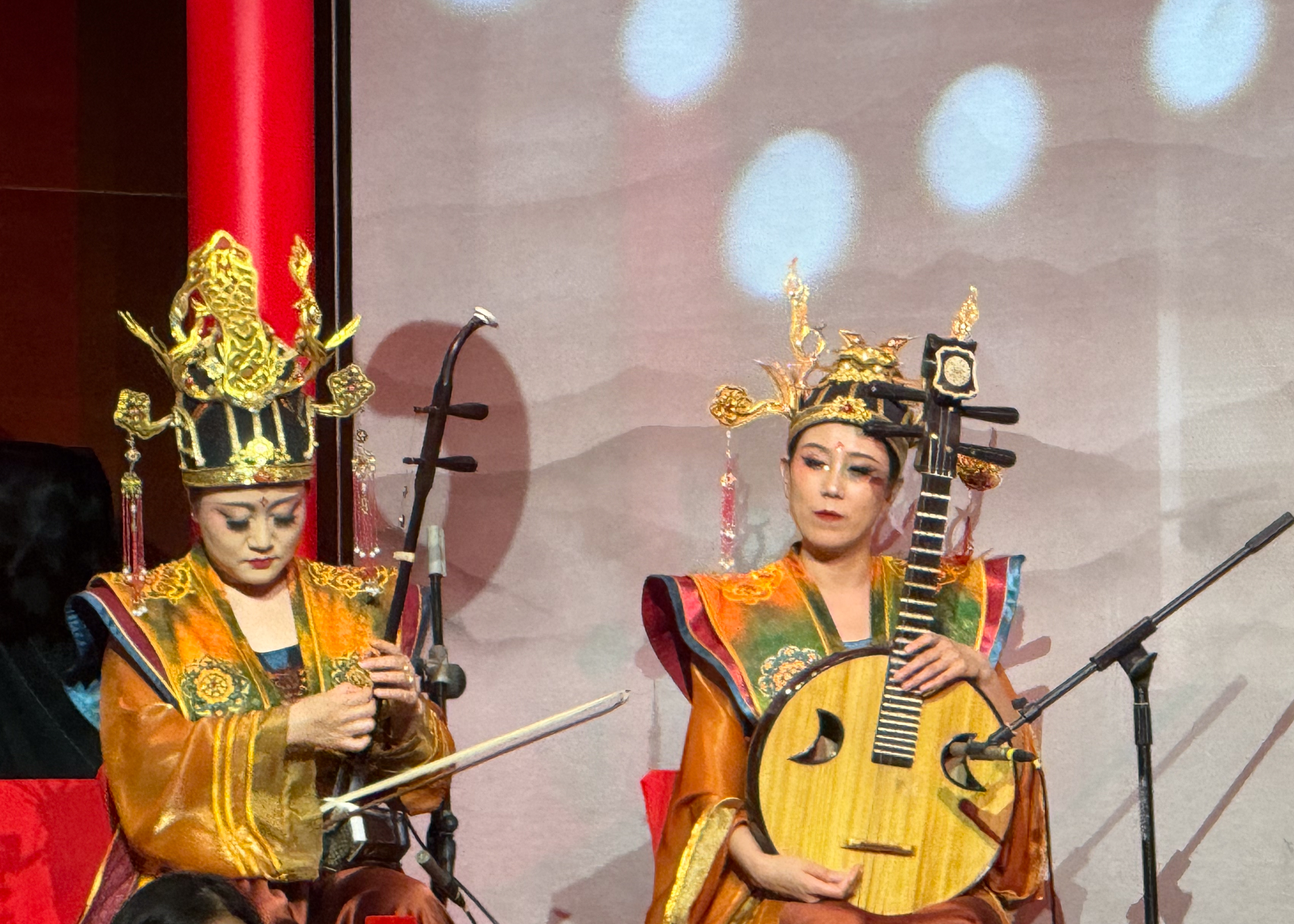
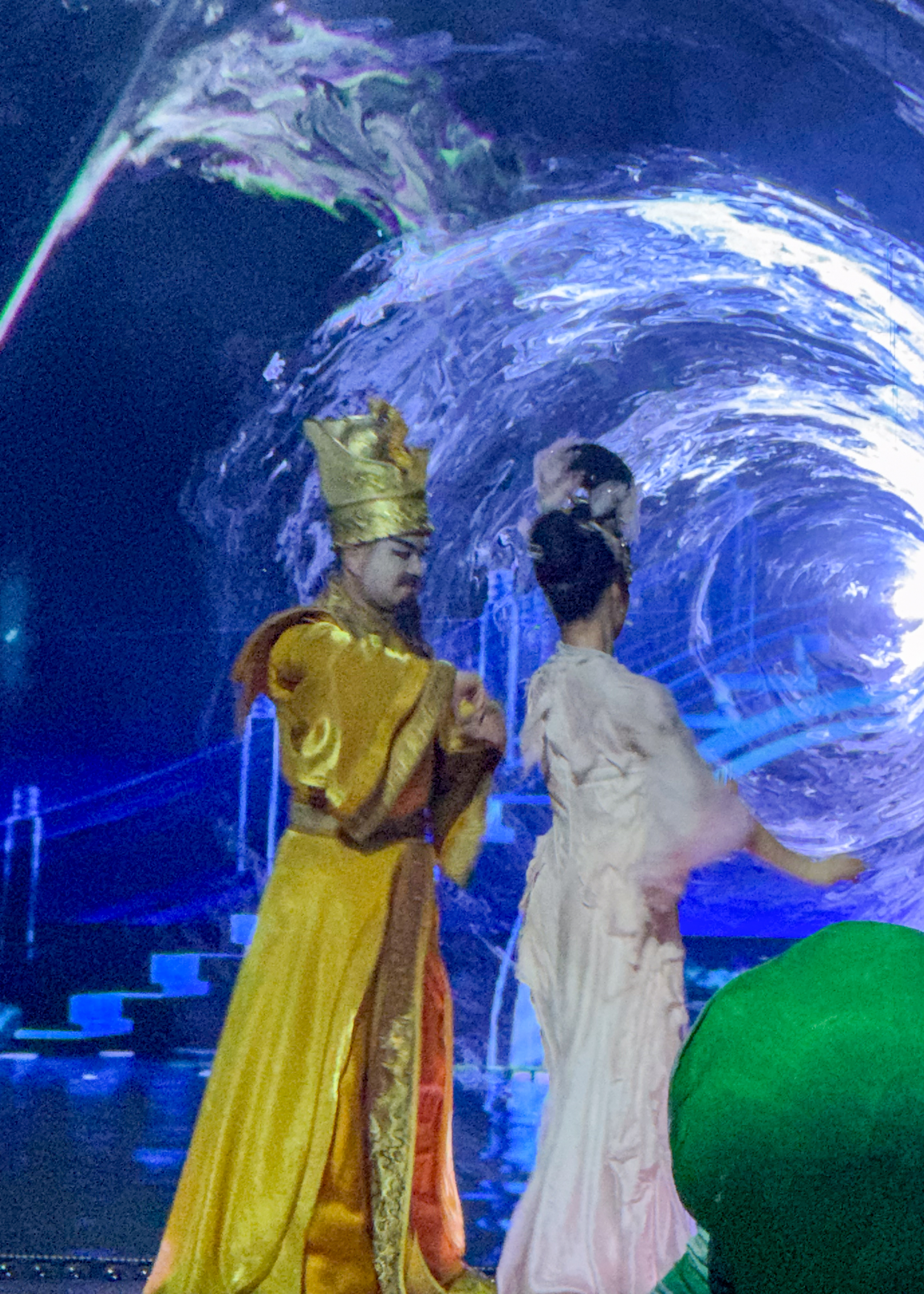
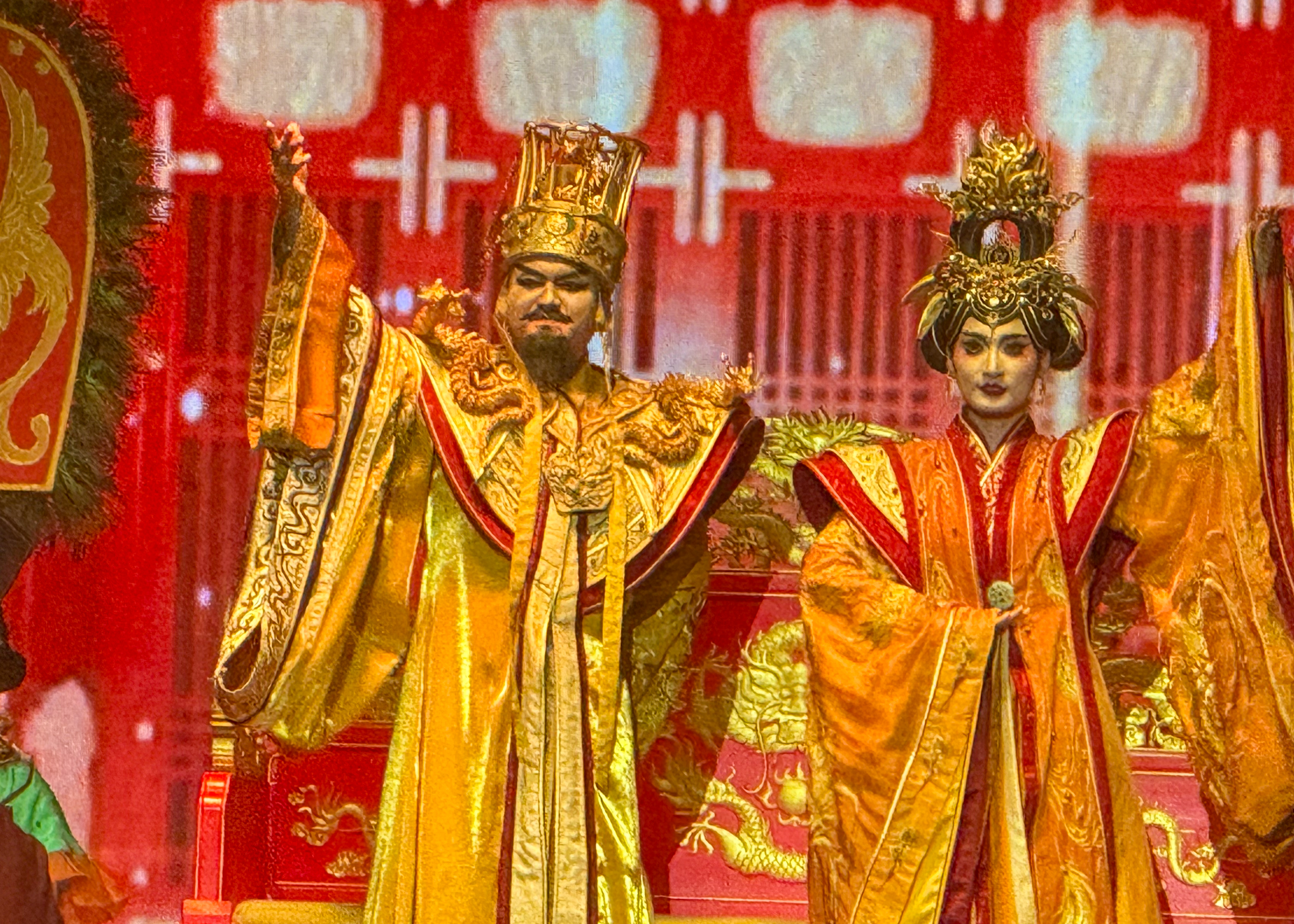
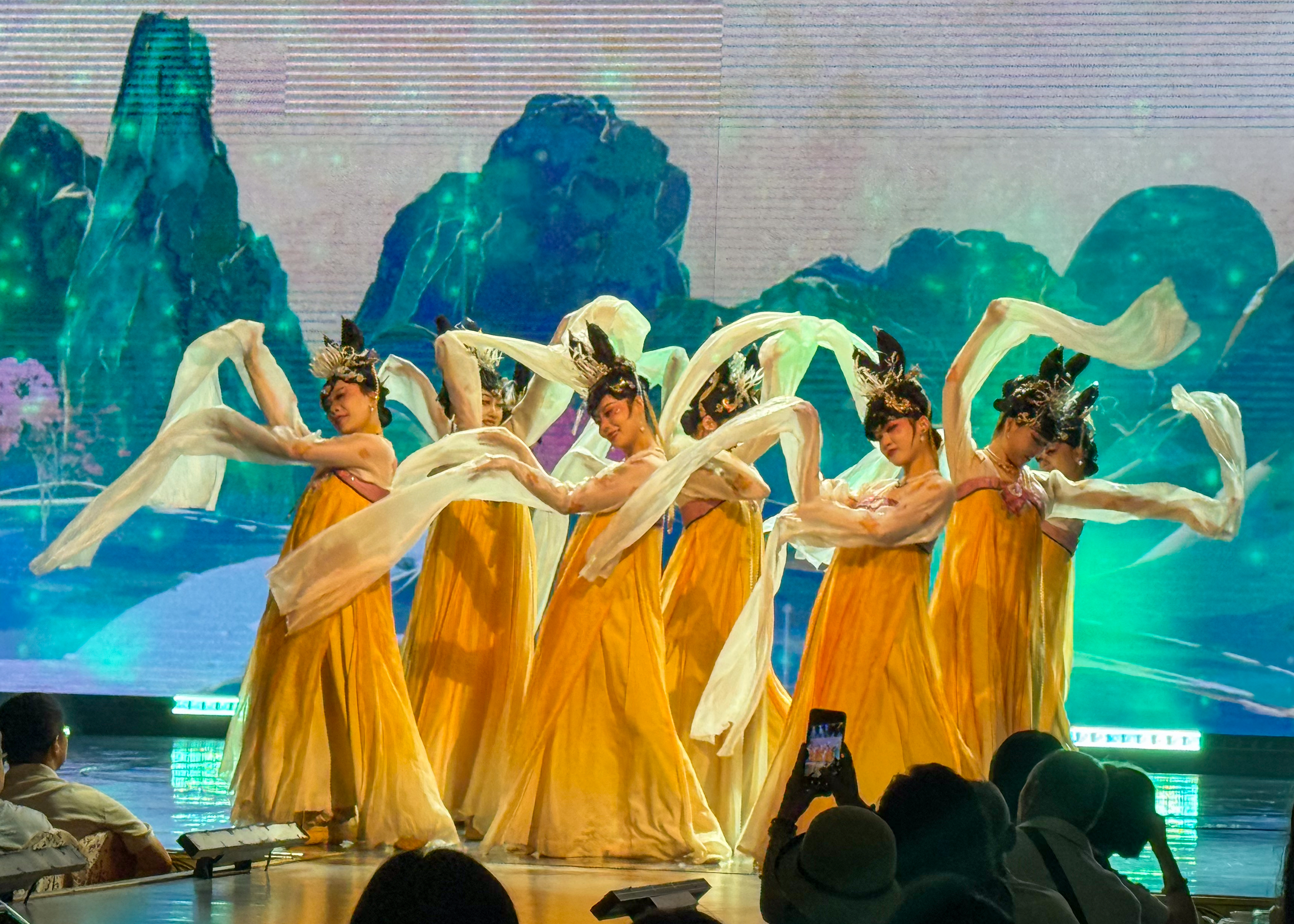
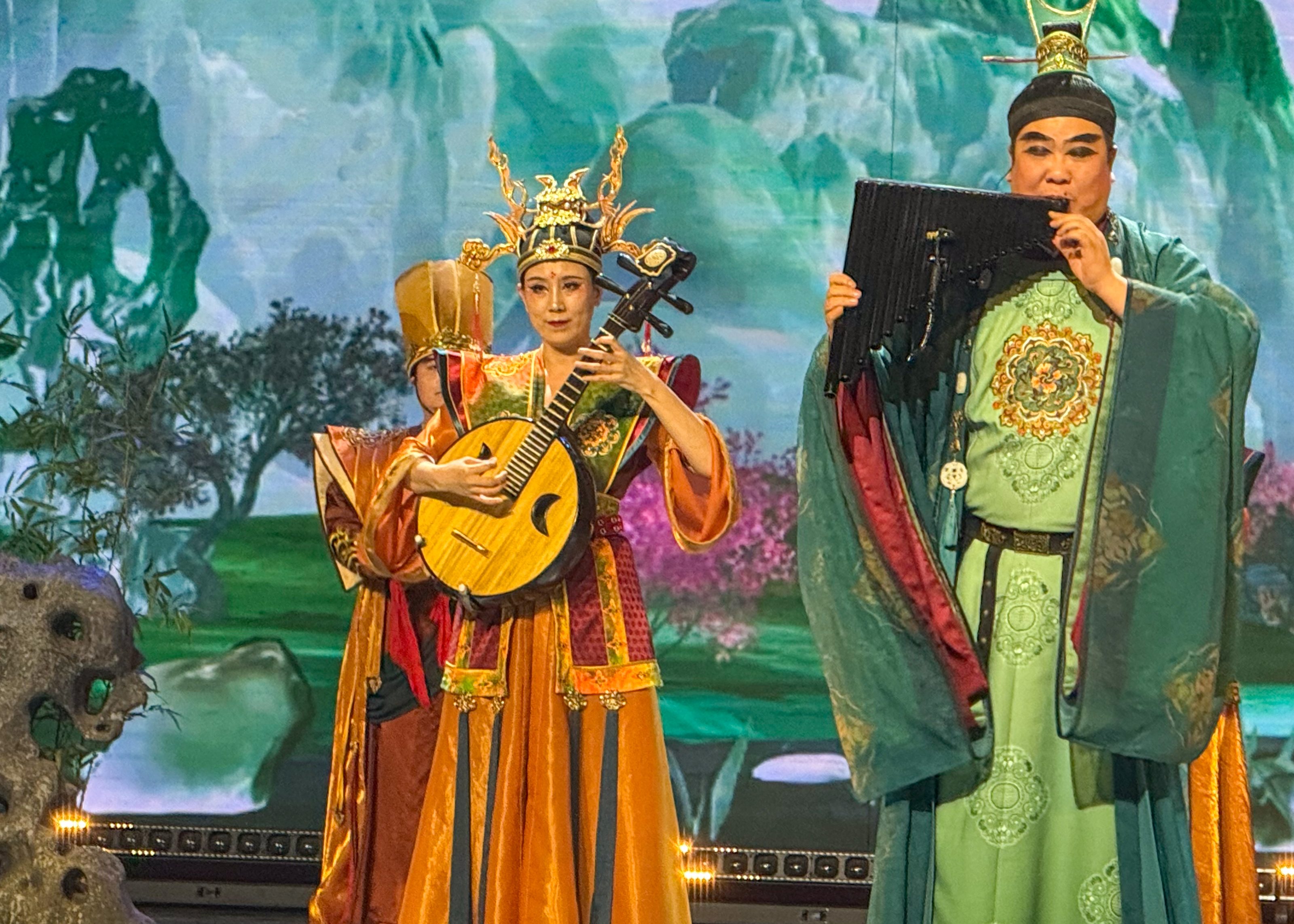
Tang Dynasty Dance Show
Finished off our day with a dinner show, highlighting scenes from the Tang Dynasty.
Discover more from Travelling Photographer
Subscribe to get the latest posts sent to your email.


June 22, 2026 at 7:06 pm
Amazing photos! Enjoying your trip with you!Sent from my iPhoneOn Jun 22, 2026,
LikeLike
June 23, 2026 at 6:33 pm
It’s going by fast
LikeLike
June 23, 2026 at 10:57 am
Nothing short of breathtaking or should I just say amazing both historically and photographically. Thanks Peter.
LikeLike
June 23, 2026 at 6:08 pm
Thanks Ron pictures do not do it justice
LikeLike
June 23, 2026 at 2:06 pm
Viewing these pics brings an immense sensation of wonder.
LikeLike
June 23, 2026 at 6:04 pm
and the pics don’t do it justice
LikeLike